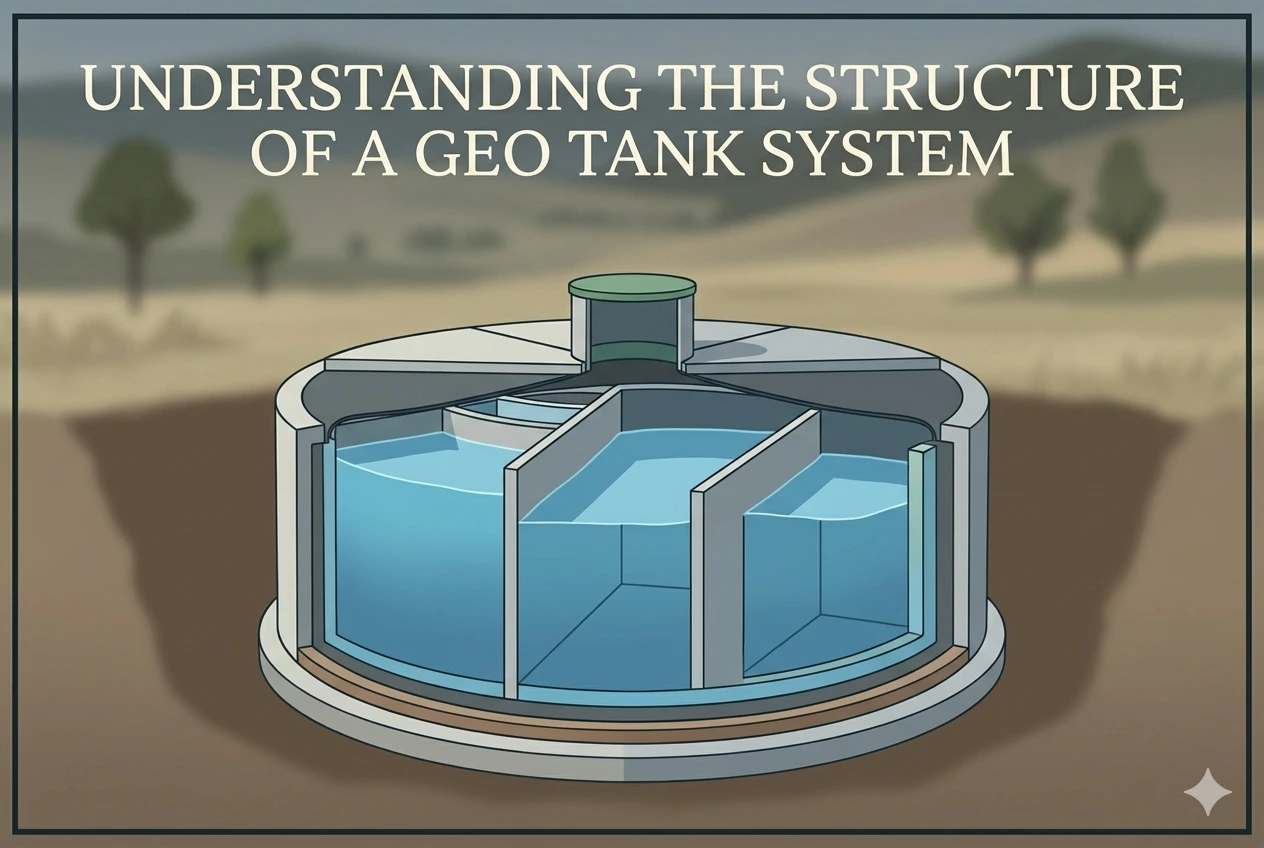
Understanding the Structure of a Geo Tank System
When most people hear the word “tank,” they picture something rigid like concrete walls, steel panels, or a heavy plastic drum. A geo tank is completely different. It is flexible, lightweight, and built from layers of engineered materials that hold enormous amounts of liquid safely and efficiently.
This blog breaks down the complete structure of an advanced geo tank system, layer by layer, so you understand exactly what you are getting and why it works.
The Foundation: What a Geo Tank Is Built On
Before we consider the tank itself, it’s essential to know about the structure above which the tank needs to be placed. A geo tank isn’t bolted down onto the ground surface or just poured into a concrete like foundation. It is placed on a levelled, clean and debris-free area.
In most installations, a ground sheet or base liner is placed below the tank. This will not only shield the bottom of the tank from sharp objects but also prevents moisture seeping up from below. Avoiding this thing is indeed one of the most common reasons tanks develop cracks in their early lives.
Geo Tanks in India are installed across a wide range of soil conditions, from rocky farmlands in Rajasthan to wet industrial areas in West Bengal. A proper base preparation enables even performance throughout the tank surface area, irrespective of ground conditions.
The Structural Fabric (The Backbone)
The base fabric of a geotank is the most important part as it serves as an inner structural layer which gives the tank its shape and load-bearing strength.
Typically this fabric is a tightly woven polyester or nylon mesh. You can’t see it from outside but it is doing all the heavy lifting required. The capability of the tank to withstand pressure completely depends upon the tightness and density of this weave. Think of it as the frame of a building, everything else depends on how strong this layer is.
The Coating (The Waterproof Skin)
Water cannot be held by the fabric alone, it needs to be coated on both sides with a waterproof material. The most commonly used coatings are PVC ( Polyvinyl Chloride) and polyurethane. PVC had long been an industry standard. It is highly affordable, UV-resistant and flexible even in cold weather conditions. Polyurethane is used when the tank needs to handle more demanding substances or exposed to extreme weather conditions.
For agriculture tanks, used to store irrigation water, rainwater, or liquid fertilisers, this coating must be both food-safe and made of non-reactive chemicals. The wrong coating can contaminate water, and even break down when exposed to certain chemicals. That is why the material selection process holds great importance.
The Seams (The Critical Joints)
A geo tank is not created from a single piece of fabric. It is cut and joined together, as a result of which seams are inevitable. If these seams are not handled properly, the tanks will eventually fail.
High-quality geo tanks will use heat welding or radio frequency (RF) welding to bond multiple fabric layers altogether. This process creates joints that are even stronger than the actual fabric. A properly welded seam will not break under pressure, or loosen over time.
Low-quality tanks often use adhesive bonding or stitching, which eventually weakens due to liquid pressure and sun exposure. Always ask your geo tank supplier about the process they have been using for seam welding and if the seam strength is independently tested or not before delivery.
The Fittings (Inlet, Outlet, and Overflow Ports)
A tank that cannot be filled or emptied is useless. Fittings are the connection points where pipes, pumps, and valves attach to the tank.
In a well-designed geo tank, these fittings are precision-moulded and welded directly into the tank wall, not glued, not screwed in from the outside. This integration is what prevents leaks at the connection points.
Standard geo tank systems always include an inlet port (from which liquid flows in), an outlet port (from which liquid is drawn out) and overflow ports (which act as safety valves to prevent overflowing). Some more advanced geo tank models also have inspection hatches, vent ports or sensor attachment points to monitor tank functioning for remote locations.
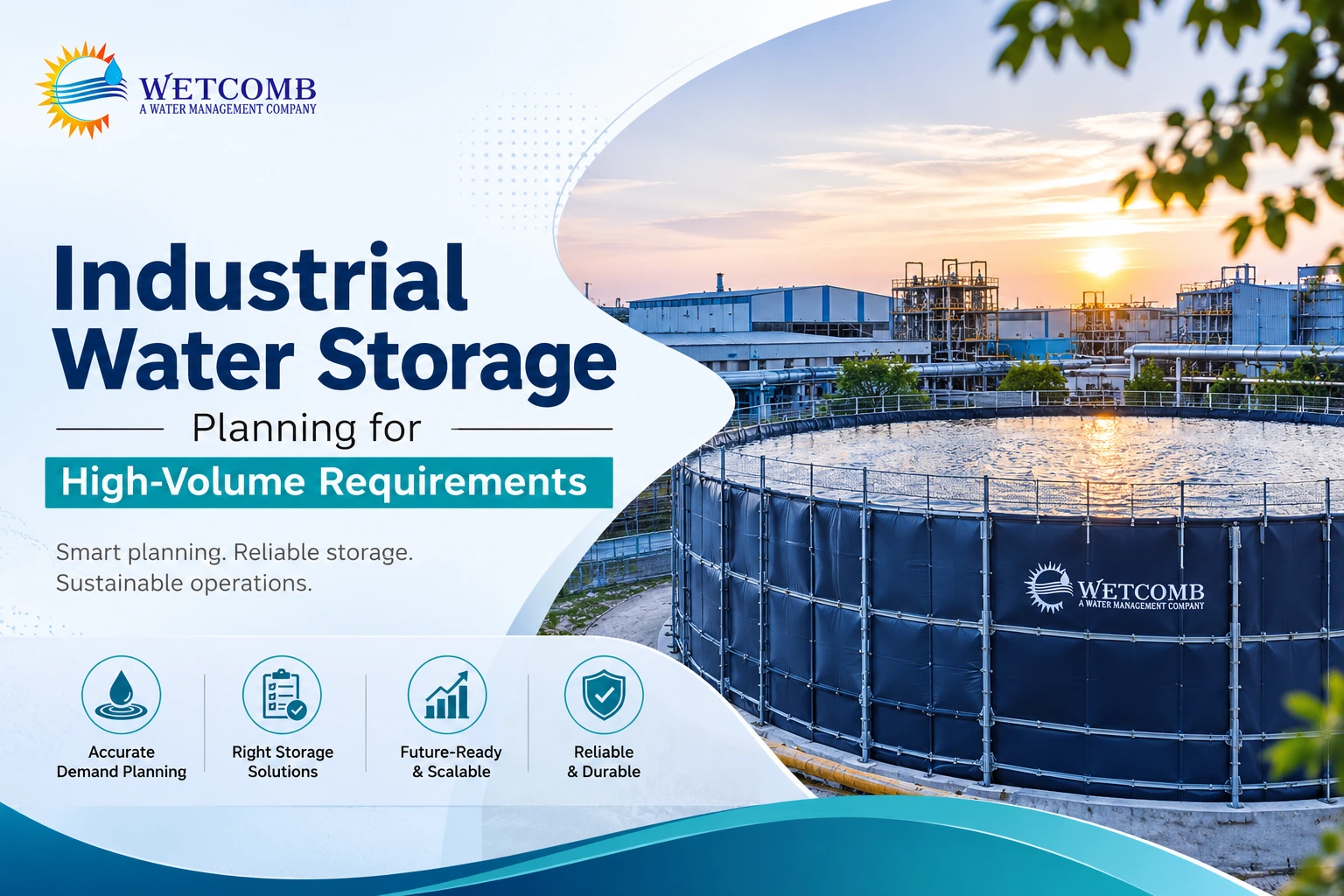
The geo tank storage capacity directly influences how many fittings are required and of what size. A small tank of 50,000 litres used on a farm will have different fittings than a commercial geo tank that can hold up to 5 million litres of water.
The Cover (Protection from Above)
Some geo tank systems include a cover or roof panel which is particularly useful in outdoor installations where sunlight, dust or debris could affect water quality. A UV-stabilised cover also significantly increases the tank’s lifespan. In high UV areas like most of India, a good cover can add several years to the service life of a tank.
How All These Layers Work Together
When you fill a geo tank, the liquid exerts pressure against the coated fabric walls. The structural fabric divides the pressure evenly across the whole surface. Welded seams keep each panel in place. The fittings channel liquid in or out without any leak. The base liner defends the tank against puncture while the cover keeps the top clean and protected. Each layer performs a function, removing any one will weaken the whole tank.
If you’re interested in learning how geo tanks are much better than the older storage methods, please read our next blog, Geo Tanks vs Traditional Tanks.
Final Word
Understanding how a geo tank is put together helps you to ask the right questions before purchasing like about the fabric quality, coating material, seam welding, and fittings. A tank that looks all right on the outside might have weak seams or an improper coating which presents difficulties within the first year.
At Wetcomb, every geo tank is carefully structured at each level. From base fabric and coatings to the welded seams and wedged-in fittings, our tanks are designed to perform with consistency under tough climatic conditions. Whether it’s a small agricultural unit or industrial-scale storage system, our tanks will always provide the expected results.