Land Preparation Techniques for Geo-Lined Tank Installation
Water conservation concerns have greatly increased among farmers, industries, and commercial establishments all over the world. As a result, geo-lined tanks are becoming a popular option for storage of large volumes of water in a safe and efficient way. Apart from the quality of the liner, one must put a lot of effort in land preparation before the construction phase starts so as to successfully install Geo tanks.
At Wetcomb, we believe that proper site preparation serves as a basic foundation for a durable and high-performing tank system. A well-prepared surface is less likely to be damaged, will be more stable, and will continue to deliver great results throughout the tank’s lifespan.
Understanding the Importance of Ground Preparation
Usually most people pay attention to the actual tank and liner materials only. Ground conditions are also equally important. When soil has inflammable elements with sharp rocks, roots, or are uneven, then liners might get damaged over time as the surface is not adequately prepared.
Such preparation will offer a stable support for the tank structure. Besides that, it also helps in keeping the water storage quality intact and lowers the need for repairs in the future.
That’s why installation of Geo Line Tanks in India involves a very elaborate site preparation process before the liner is placed.
Site Selection and Initial Inspection
The first thing to do is to find a suitable location. The selected spot should be evenly surfaced, not too far to access, and with no serious water drainage problems.
During inspection, contractors usually check:
- Condition of the soil
- Natural slope of the land
- Amount of vegetation present
- Available water sources
- The availability of heavy equipment
Carrying out a very detailed inspection can bring out hidden problems which may hinder the installation process later.
Clearing the Installation Area
Once the site is selected, the entire area should be cleared properly. Vegetation, bushes, roots, stones, and construction debris must be removed.
Even small objects buried deep can exert force through some pressure points under the liner and will make them badly punctured or worn out with time.
It is advisable to have a debris-free and leveled installation surface as it is safer for the liner and increases overall performance capacity.
Excavation and Tank Shaping
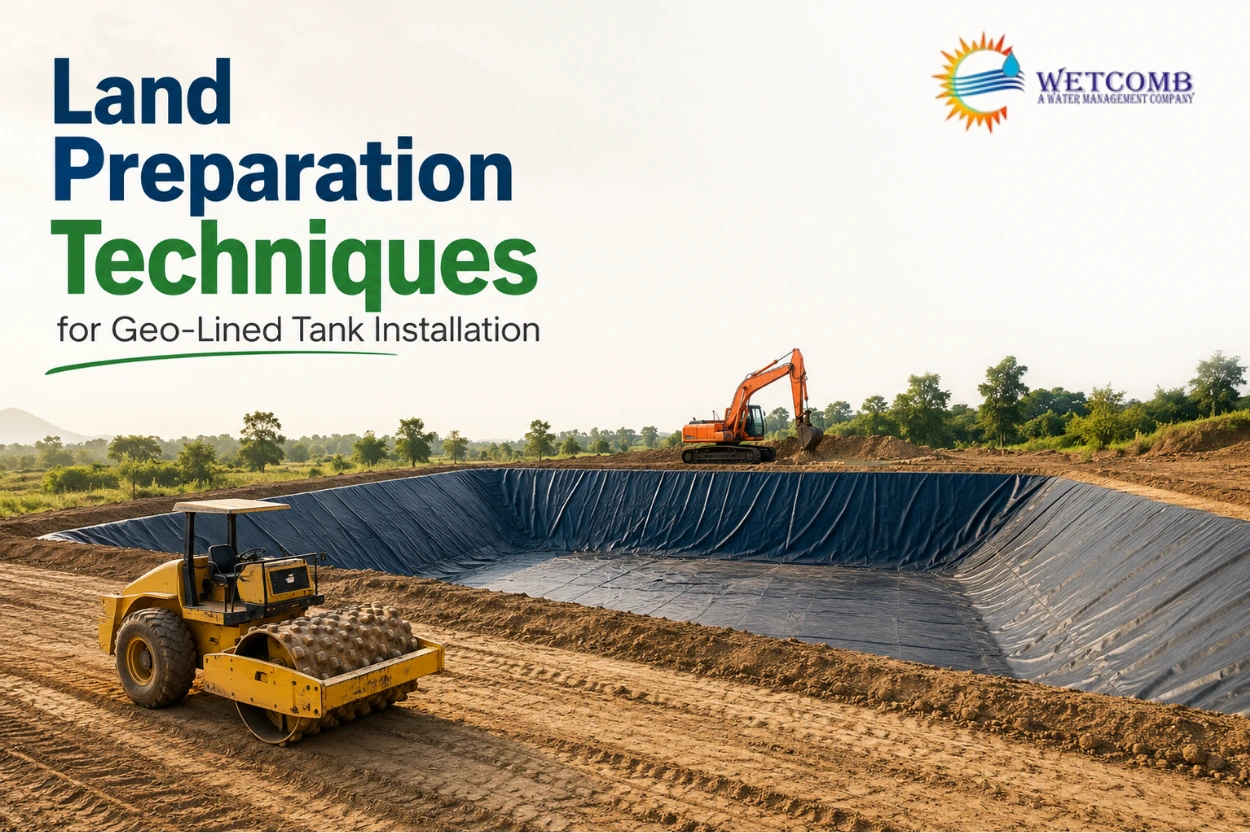
After site clearing, excavation work begins according to the required dimensions of the water storage tanks.
The excavation process should create:
- Uniform depth
- Stable side slopes
- Smooth corners
- Proper tank capacity
Careful shaping ensures uniform water distribution inside the tank and good liner durability because it reduces unnecessary liner tension.
Recently, many farm and industrial projects opt for Geo Tanks in India because they are capable of being tailored as per different storage needs and at the same time, they can maintain excellent durability.
Surface Leveling
Once excavation is complete, the base and sidewalls must be leveled.
Uneven surfaces can cause irregular pressure on the liner after the tank is filled.
Having a leveled surface ensures the support is uniform throughout the entire structure. Usually, contractors employ grading equipment to smoothen the surface by removing bumps, depressions, and rough patches before the next
Soil Compaction
Compaction is the most crucial aspect of preparing the land. Loose soil is most likely to settle down after the tank is filled which might cause surface deformation and create stress points. Proper compaction will tighten the foundation and reduce the chances of getting affected by the soil movement in the future.
Benefits of compaction include:
- Improved stability
- Reduced soil settlement
- Better load-bearing capacity
- Longer tank life
A firm foundation is essential for any successful Water storage project, regardless of the tank size or application.
Removing Sharp Materials
After compaction, the site should be inspected again.
Workers must carefully remove:
- Gravel
- Broken stones
- Metal fragments
- Concrete pieces
- Root remnants
The main aim of this cleaning process is to reduce the risk of liner punctures and improve long-term performance.
Installing a Protective Layer
It is highly recommended to add an additional protective layer in areas having rough and rocky soil.
This layer may consist of:
- Fine soil
- Sand
- Geotextile fabric
The goal is to provide a specific amount of padding between the liner and the ground surface area.
This extra safety is extremely beneficial if your Geo membrane tank is set up in a region where soil has abrasive substances.
Preparing Anchor Trenches
Anchor trenches are some thin strips of soil excavated around the tank’s edge.
These trenches help in anchoring the liner and ensure that the system stays tightly bound even after the installation.
Proper anchoring offers several advantages:
- Better liner stability
- Protection against wind movement
- Reduced shifting during operation
- Improved structural integrity
Anchor trenches are considered a standard practice in most geo-lined tank installations.
Planning Drainage Around the Tank
External drainage is rarely given importance but is an essential factor in tank protection.
Water from rainfall should never collect around the exterior of the tank structure. Besides, extremely wet soil can cause weakening and lead to erosion.
Simple drainage channels can help redirect runoff away from the installation area and maintain long-term stability.
Final Inspection Before Installation
Before the liner is installed, a final quality check should be performed.
The inspection should confirm that:
- The surface is smooth
- Soil is properly compacted
- Sharp objects have been removed
- Drainage systems are in place
- Anchor trenches are ready
Only after these checks are completed should the installation proceed.
A lot of project owners pick HDPE lining due to its robust features, high flexibility, and ability to withstand various environments. Yet, a perfect liner without a well prepared foundation will not give you expected results.
Conclusion
Successful tank performance starts long before water enters the system. Each phase of land preparation adds to the total strength and trustworthiness of the installation.
Proper groundwork in all cases, be it a project for farming, industrial or community infrastructure, helps in making durable leak-proof tanks that can work efficiently for many years.
Providing proper site preparation before installing geo tanks is a great way to eliminate all the future problems and increase the system lifespan.
As a leading Geo Tank Manufacturer, Wetcomb knows how crucial each preparation step is and is committed to providing reliable storage solutions that have a strong foundation.