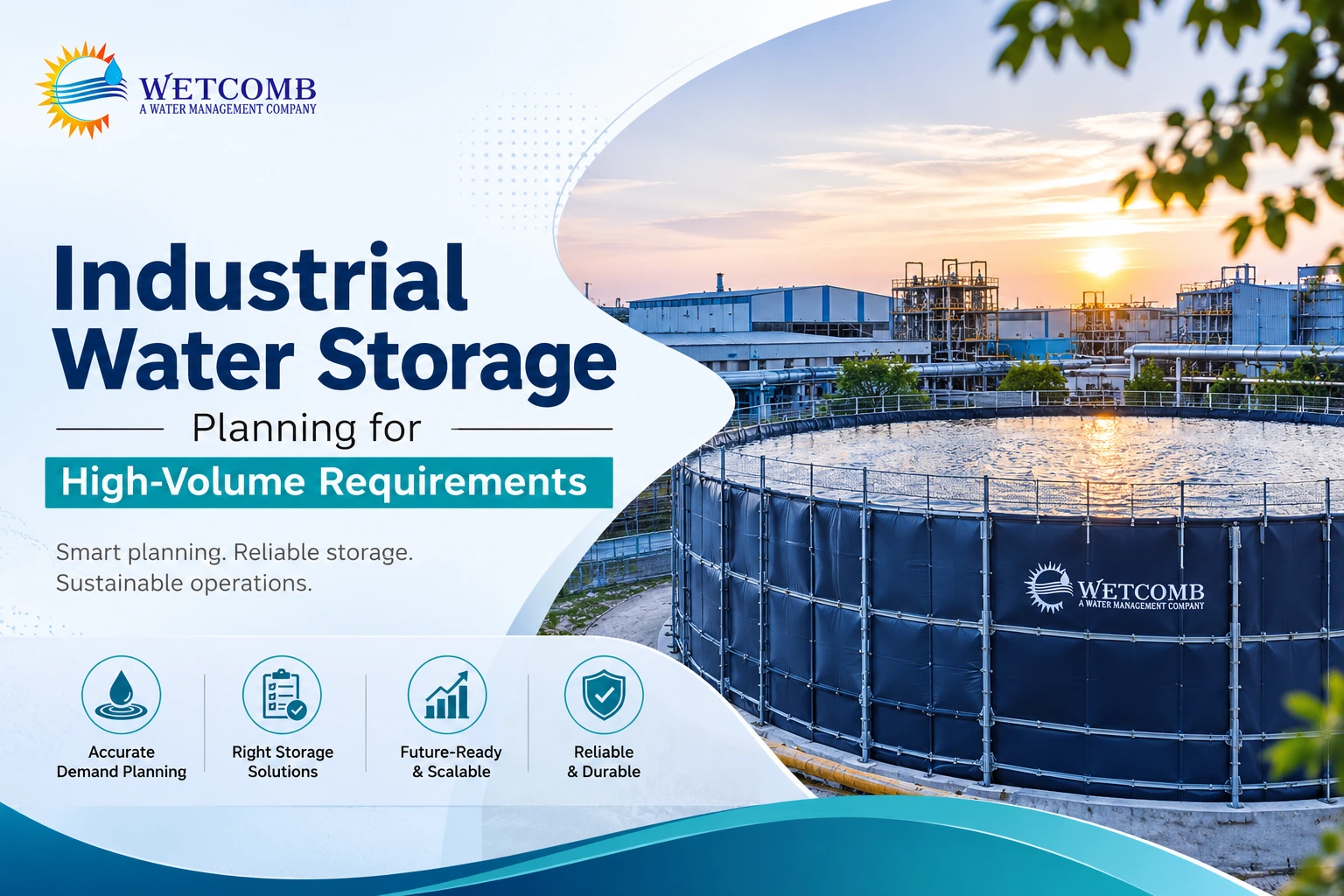
Industrial Water Storage Planning for High-Volume Requirements
Water acts as a silent hero behind every large factory, processing unit or industrial park. There could not be any space for guesswork or errors with high-volume water needs like cooling mechanisms, cleaning equipment or everyday operations. But, most of the businesses still consider water storage as an unimportant decision until their production line stops or costs doubles.
Large scale water storage planning is a little bit different. It is not just about picking a random container and hoping for the best. It’s about asking yourself what your real demand is, selecting the appropriate structure and creating a system that scales with your business. Let’s walk through what proper planning looks like in 2026.
The Importance Of Having A Proper Plan
Industries are scaling at a much faster rate now. With the introduction of new production lines, additional shifts and expanded facilities, water consumption have also increased a lot. Concurrently, water availability is becoming less reliable due to seasonal shortages and increasing pressure on urban supplies.
This is essential for planning, not an option. Improperly configured storage solutions may result in production delays, increased costs for emergency tankers, or even severe outcomes like complete shut-downs during peak demands. You need to set up the proper foundation before you even choose your water storage tanks in order to get ahead of these problems.
Step One: Calculate Your Water Demand
The foundation of a good plan is based on knowing your numbers. Begin by mapping daily consumption from every department — production, cleaning, cooling systems and staff facilities.
Don’t just examine typical usage patterns. Peak demand times are important, too. Your storage has to be able to support the surges, like multiple shifts or seasonal spikes.
This is where a low-maintenance strategy comes in handy:
Total Storage Required = Daily Usage × Backup Days + Safety Buffer
The safety buffer enables you to meet unexpected supply interruptions, equipment break down and emergencies, or sudden demand increases. One of the biggest reasons facilities end up under-prepared is by skipping this step.
Step Two: Understand The Reliability Of Your Water Source
How reliable is your current water source? The speed of refill and regularity depends on whether you use municipal connections, borewells or a combination of both.
Additional reserve capacity is particularly important in areas with irregular groundwater levels or inconsistent municipal supply. Conversely, sites that can access reliable fast-filling sources might be able to manage with a smaller system size — as long as those backup calculations are solid.
This is where so many companies go wrong.They assume that their source of water will always deliver reliably, without incorporating contingency into the way it has planned to store.
Step 03: Select Appropriate Storage Structure
After learning about the volume requirements, you need to decide upon the structure. For small-scale operations, a traditional concrete or steel tank will work, but industrial applications with larger volumes are likely to benefit from something more flexible.
And this is where a reliable Geo Tank Manufacturer becomes useful. They provide high-capacity storage options without adding the extra costs associated with traditional tanks. Their specific advantages are their temporary nature and vulnerability to extreme weather events. In addition, they can provide a faster installation time (when compared with concrete reservoirs) and so work better in facilities requiring flexible, scalable solutions.
For sites also collecting rainwater as a supplementary source, including rainwater storage tanks as part of the plans can minimize dependency on outside water sources while enhancing sustainable objectives that many industries are adopting nowadays.
Step 4: Add in Site Conditions
However, not every land is ready for large-scale storage installation. Environmental factors including ground stability, available space, drainage patterns and accessibility for maintenance, decide the type of system that will work upon your site.
Facilities with land restrictions might need vertical systems while facilities with open space may opt for extensive lined systems that offer more volume before height becomes an issue. A proper site assessment prevents cost surprises during installation, so think twice before you finalize your storage design.
Step 5: Build in Room for Growth
There is one thing many planners tend to miss. Your water needs will not always remain the same. Industrial plants often grow, add new production lines or work overtime.
If your storage system cannot scale with your business, you’ll encounter the same issue soon again, as well as pay for deploying additional systems later. Geo-Line Tank is also designed in a way that makes it modular, giving you the option to increase your capacity without renewing your system completely as and when required.
Step 6: Consider Maintenance and Durability
High-volume storage systems need regular maintenance, but the amount of support you have to provide largely depends on what material and structure you choose. Corrosion and leakage in systems create invisible long term costs which are usually higher than the initial savings.
When comparing options, think beyond the upfront price. Think of durability: how long will it work without any maintenance and whether the system can easily deal with wear after years of continuous industrial usage. This is especially important given the growing demand for Water Storage Tanks in India, where climate conditions and water quality vary widely across regions.
Bringing It All Together
Planning for industrial water storage is not a one-time decision but a series of data-driven decisions. It reduces risk and improves long-term efficiency — all the way from calculating realistic demand to picking a location type and getting set for future growth.
Businesses that devote time to the planning process consistently avoid the costly disruptions that come from reactive, last-minute storage decisions. Building a water storage system is much more about recognizing that holding onto water is an important strategic priority; one that can be integrated into the design of any new facility and it need not be treated as just incidental investment.
Our expert team at Wetcomb understands that water storage needs are unique for every industrial facility. They have partnered with multiple businesses to design storage solutions that align well with your actual demand, site conditions, and long-term growth considerations so your operations run smoothly without interruptions.
Planning a high-volume water storage project? Let’s discuss a solution built around your facility’s actual needs.