How to Select Water Tanks for Harsh Climate Conditions
When you live in a place where the weather is extreme, one of the most difficult obstacles you have to overcome is keeping your water safe. No matter whether you live through sweltering summers, freezing winters, or salty coastal winds, what kind of water tank you choose makes all the difference. Going into 2026, and with climate patterns becoming ever more erratic, selecting a tank that can withstand tough conditions has become more important than ever before.
At Wetcomb, we have seen for ourselves how the right water storage solution can save families and companies from the worst effects of extreme climates. This guide will give you an understanding of what features to look for when choosing a tank in tough surroundings.
Understanding Harsh Climate Challenges
Water tanks are put to serious tests by harsh climates. Tanks crack with extreme heat; freezing temperatures make water expand and burst them apart, and coastal wind featuring salt-laden air corrodes tank materials. High-intensity UV rays in desert areas rapidly decompose the surface of tanks.
Your water storage solution must be able to meet this challenge. With the wrong choice, your tanks will need frequent maintenance, or else they will fail after a few years.
Material Matters: Getting Your Build Absolutely Right
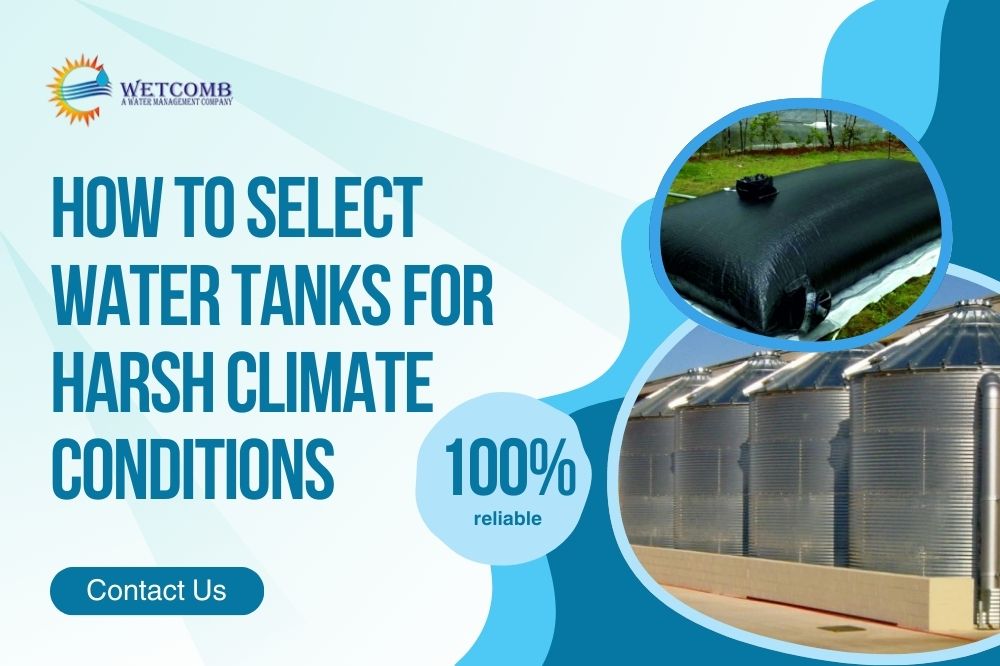
When comparing plastic vs steel water tanks, both have strengths relative to extreme climatic conditions. Steel tanks are highly durable but can rust in coastal areas if they are not painted properly. These tanks can conduct heat energy very well which makes it difficult to manage water temperatures in extreme climates.
Modern plastic tanks, particularly those made from food-grade polyethylene, handle harsh weather surprisingly well. They don’t rust, are lighter in weight providing easy installation and resist corrosion due to salty air. But of course, not all plastic tanks are created equal.
For greater security, some manufacturers are even producing multi-layered long-lasting water tanks with UV-stabilized outer layers and food-grade inner linings to attain greater advantages.
UV Protection: Your Shield Against Sun Damage
In areas that get intense sunlight, there has been a trend of using UV-protected water tanks. That’s because ultraviolet light breaks down the plastic molecules in tank material, making it brittle and inefficient. By 2026, good manufacturers will start adding UV stabilizers directly in the tank material.
Pick tanks with dark colors such as black, dark green or navy blue. These should effectively block sunlight out from your tank and stop algae from growing in it. A good UV protected tank will be warranted for at least 5 years, although many are now guaranteed for 10.
Resistance to Temperature: Tackling the Extreme Heat and Cold
Different environments demand different treatment. In hot areas with temperatures above 45 °c, the tank wall material must be able to expand thermally without warping. Tanks that are both insulated and coated with a reflective surface will help keep water cooler and protect structure at the same time.
When water freezes into ice, tanks need provision for flexibility. Any rigid tank will crack under such conditions. Some advanced tanks are now made with expansion chambers or flexible walls to cope up with such situations without causing any harm.
The Geo Line Tank series, for example, utilizes specially formulated materials that can withstand temperature ranges from -20°C up to 60°C, making them highly suitable for both mountain areas and desert regions.
Considering Coastal Area Water Tanks
In coastal locations, salt spray and high humidity are two major problems for water tanks. Salt corrodes materials and destroys inferior plastics. If you are within 5 kilometers of the coast, choose a tank specifically designed for marine environments.
If you live near the sea and are within 5 kilometres of it, use a tank designed for marine environments. Select fittings made from stainless steel and tank bodies which are resistant to corrosion, with anti-microbial properties. For people living close to water (and the sea), rainwater storage tanks has become one way of effectively solving issues due to lack of drinking water.
Capacity Planning for Water Scarcity
In harsh areas, however, water flow is usually irregular and not to be depended upon. This year, there has been a major increase in water shortage problems and seasonal droughts.
Choose your tank size to store enough water to sustain household life for 7-10 days during water shortages.
A family of four typically uses about 600-800 liters of water in a day. In areas of harsh climate, it is better to install a number of medium-sized tanks rather than one giant tank. This approach provides a fallback if one tank is out of order and makes maintenance easier.
Installation Position and Support
The method and location of tank installation are critical issues. For hot climates, shade structures or situating tanks under trees are good ideas. In very cold regions, consider partially burying the tanks or insulation to allow protection against freezing.
Ground support must be level as well as firm. The exertion due to uneven settling causes tank walls to break. In places where the earth is subjected to frequent movement, reinforced concrete bases should be used. For raised installations, make sure not only that the tank can be accommodating in size but also able to withstand high winds and earthquakes.
Maintenance and Monitoring
Choose tanks which are convenient to maintain, clean, and monitor. If neglected, in harsh climates their useful life can be shortened with tragic consequences. Look for larger inspection hatches and drain valves suitable for complete emptying.
Modern tanks in 2026 even feature smart monitoring systems that provide early alerts, such as water level indicators and error notifications. This technology comes in handy for remote areas where tank failures could leave you without water for a long period.
Conclusion
In harsh climates, the right choice for water tanks will depend on your precise environmental conditions. Saving a few thousand rupees now is not worth sacrificing quality later. A cheap tank that fails in two years costs more than a premium one that lasts 15-20 years.
Check the scores given to food-grade materials and their heat resistance. Also, go over the terms of warranty carefully before you decide to buy; choose manufacturers who are known for quality service in nearby areas. A good water storage solution gets you through climate extremes without ever running out of clean water to drink!
With the introduction of advanced tank technologies in 2026, more and more options are now available for harsh climatic conditions. Wetcomb knows how difficult it is to preserve fresh water in harsh environments and offers expert guidance to help you choose the best water tank that will serve you long into the future.
If you’re still having doubts, our next guide, Flexible vs. Rigid Water Tanks, looks into how different designs of tanks perform in different conditions.
Pay a little more initially, but choose well, then maintain at regular intervals. Your water security depends on it.