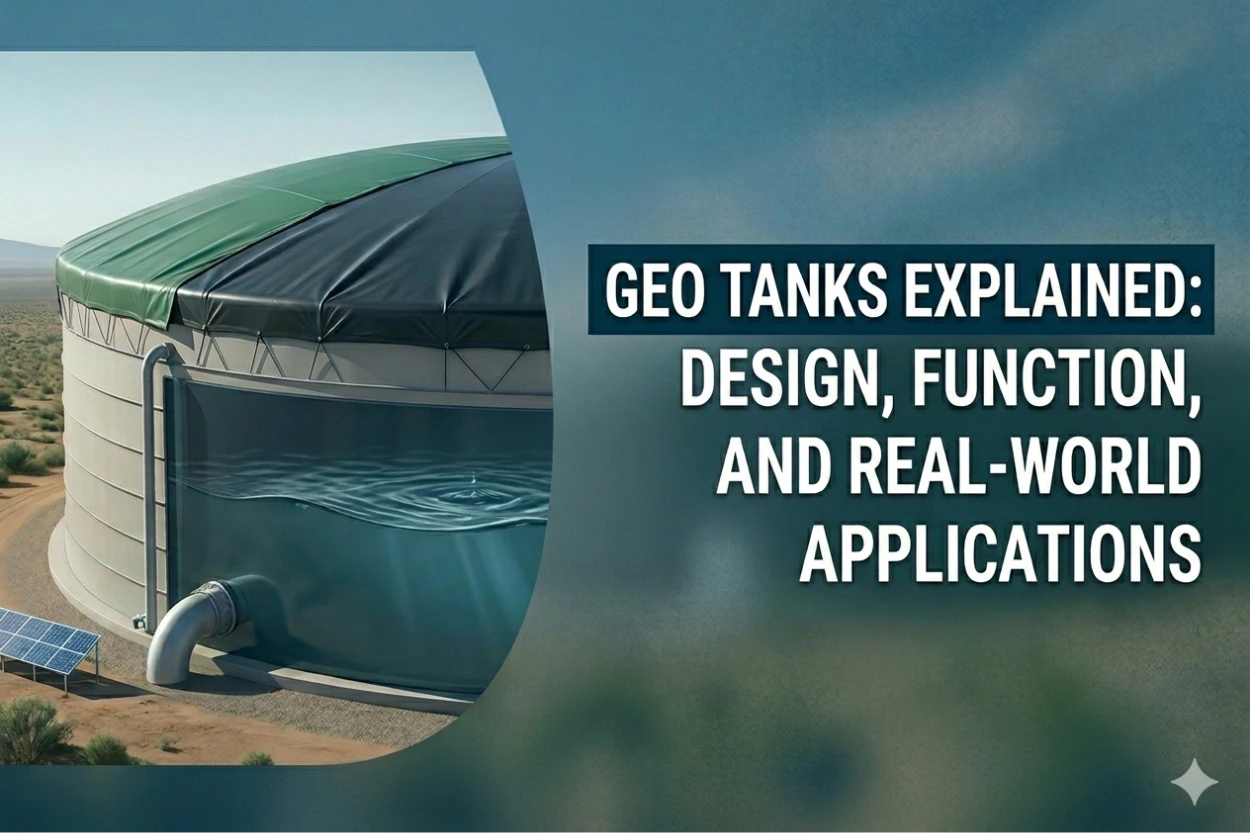
Geo Tanks Explained: Design, Function, and Real-World Applications
Most people are unfamiliar with Geo Tanks, one of the most useful water storage tools available today. It’s versatile, economical, and easy to set up. A geo tank can hold volume from a few thousand litres to several million litres. This article will explain its origins, structure and uses all over India and beyond.
Explain Geo Tank
A geo tank is a large, flexible liquid storage system. It does not have very hard walls. It doesn’t need a construction crew to build it or bolt it down to the ground.
At its core, it is a sealed chamber made of engineered synthetic fabric, tough enough to hold millions of litres of liquid but flexible enough to fold up and be transported on a flatbed. When empty, it lies flat. When full, it takes a low rounded shape distributing the entire liquid weight evenly across the ground below it.
Designing of a Geo Tank
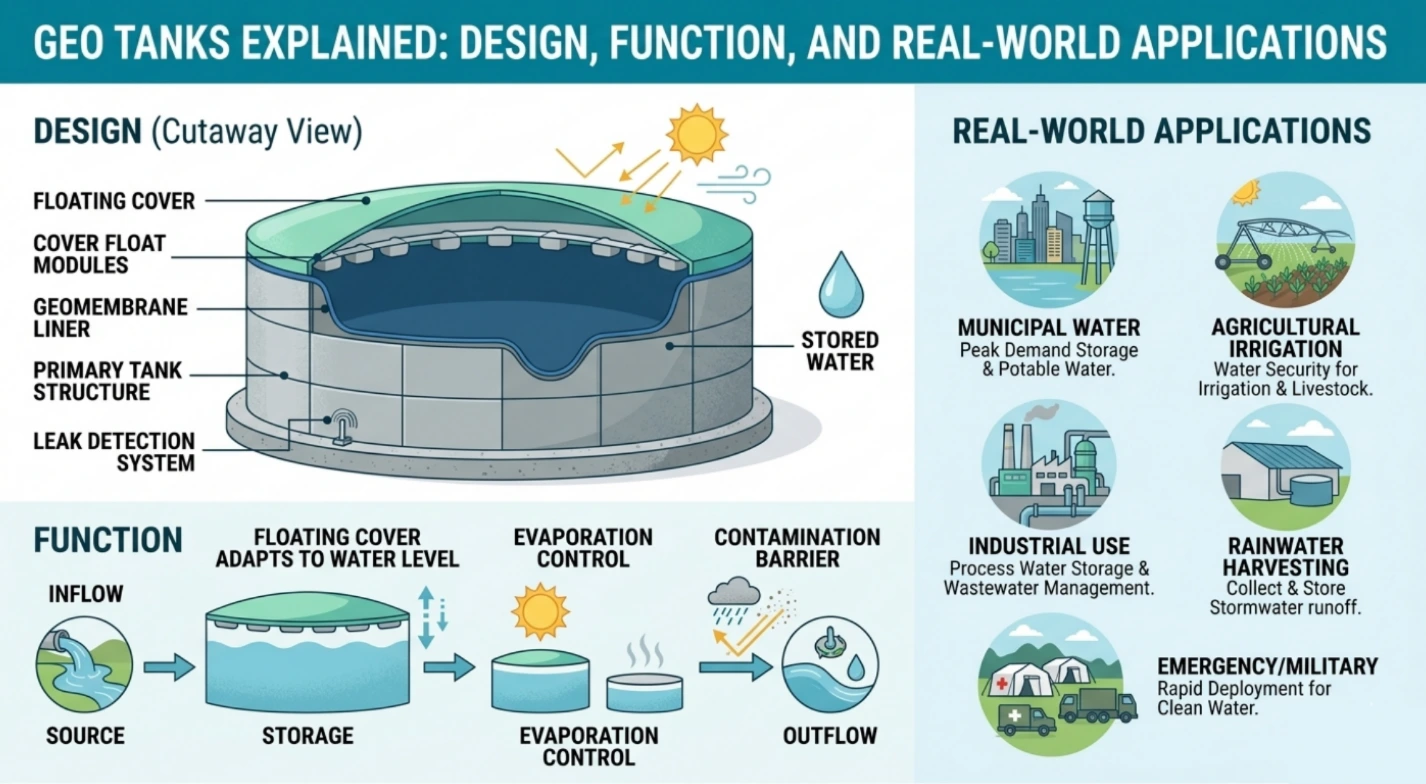
Usually, these tanks are fabricated with a multi-layered fabric construction that features a strong woven base fabric which is then coated on both sides with synthetic materials such as PVC or polyurethane. Such a combination mainly improves the tank features like watertightness, UV-resistance and its capability of bearing internal pressure.
The hdpe tank has a somewhat different design. Rather than coated fabric, HDPE (High-Density Polyethylene) tanks are made of a semi-rigid or fully rigid shell which has an excellent chemical resistance.
That is why geo tanks made of HDPE are often a suitable solution when one wants to have storage for something other than water, for example, liquid fertilizers, industrial effluents, or food-grade fluids which strongly react with standard coatings.
Seams are an important part of any geo tank design. Poor seams indicates the presence of leaks in the tank design. All good manufacturers either heat-weld or RF-weld their seams, making them even stronger than the main fabric. Before leaving the factory, these tanks must have their seam strength tested and certified to ensure longer lifespan.
Other fittings like the inlet, outlet, and overflow ports are precision-moulded and integrate directly into the tank walls. This system can not be neglected at all. A poorly fitted inlet may start leaking within a few weeks of use.
How a Geo Tank Actually Works
Firstly, the tank is placed on a clean and levelled surface to manage proper functioning. A pump or gravity feed is connected to its inlet fitting. As the liquid flows in, the tank starts expanding. When you need that liquid again, just open the outlet valve and pump it out.
These tanks do not contain any moving part or mechanical system that require frequent servicing. No chemicals needed to keep the tank from corroding. The closed structure also protects the stored liquid from contamination and evaporation from an open surface.
Geo Line Tanks in India are specifically designed to cope with India’s varied climatic conditions, from Gujarat’s sweltering summer to heavy monsoons in the northeast. UV-stabilised coatings and reinforced seam construction make these tanks suitable for year-round outdoor use without degrading.
Where Geo Tanks Are Being Used Right Now
Water-Scarce Agricultural Regions
Geo tanks are used by farmers who face unpredictable rainfall and dry seasons to store water during the time of extreme rainfall. High capacity geo tanks can store enough water to manage an entire dry season, allowing irrigation under several acres of land, without digging ponds or laying any permanent pipework.
Heavy Industry and Manufacturing
Today, industrial geo tanks are widely used in textile processing, chemical manufacturing, and power generation. These sectors usually need large reserve tanks on short notice. With the right lining, they can handle substrates as easily as concrete tanks.
Remote Infrastructure Projects
Geo tanks are needed on-site for remote projects such as road construction, building tunnels, and bridgework. The tanks can be moved with ease from site to site. No prior site preparation is needed apart from a flat, debris-free surface.
Benefits of Geo Tanks That Keep Bringing People Back
Geo tanks are considered different from the other conventional storage options on the basis of four factors including, speed, price, versatility and durability. A geo tank can be installed within a day and costs just a fraction of what a concrete reservoir would cost to build. It can be easily relocated. If properly taken care of, a good quality geo tank will last around 15-20 years.
This is why the top geo tank companies in India focus more on product certification and pressure ratings together with multiyear guarantees because they know that a tank which fails in the field will never get recommended again.
Read our next blog on Geo Tank components if you want to understand in detail about the functioning of the Geo tank system!
The Right Partner Can Make All the Difference
The quality of the Geo tanks directly implies the values of the company standing behind it. Manufacturing expertise is something that just can’t be faked as crucial factors like material quality, seam integrity and internal fittings, all depend on this expertise only.
Wetcomb has established a great reputation by providing geo tanks that could work under real life conditions like on farms, at industrial sites, and in remote project locations. When you have a liquids storage problem and need a reliable solution that is easy to deploy, cost effective and highly durable, then reach out to Wetcomb and let the right tank find the right project.