Key Factors That Determine the Life of a Water Storage Tank
A water storage tank is a long term investment. They must be able to store clean water and last through all seasons, without giving any trouble for years. However many tanks will start depleting within just a few years of use. They will start leaking, lose their original shape or even begin to contaminate the stored water.
This raises the question: how can you differentiate between two tanks based on their durability? Here are 4 factors that directly affect the lifespan of your water storage tank.
Material Of The Tank
Firstly, one must consider the material with which the tank is made up of. Today the best tanks are made from food-grade linear low-density polyethylene (LLDPE) or high-density polyethylene (HDPE). These materials are strong, flexible, and non-toxic for storing drinking water as they do not react with water or release any harmful substances over time.
It’s important to always check whether the material is new or recycled. Tanks made from recycled plastics may cost less up front, but wear out much more quickly and eventually have ill effects on water quality.
UV Protection
India receives a good amount of sunlight over the year. Without the aid of proper UV stabilisers, specially built into tank walls, this extreme sun exposure will damage the tank material layer by layer, resulting in color fading, brittleness and cracking.
A UV resistance water tank is designed to deal with this phenomenon. The stabilisers that are introduced into the tank walls during production creates a barrier against sunlight, keeping the container strong and sound for years. This also deals with the problem of algae growth. Sunlight can easily pass through unprotected tanks making it easier for them to affect the water quality.
Wall Thickness and Build Quality
While comparing top-rated water storage tanks, always check specification sheets for wall thickness values, particularly at regions where pressure is higher like the base and the sides.
With the help of its thicker walls, a tank can sustain water pressure more effectively, fend off outside impact and is less likely to decompose under heat peaks. Thin-walled tanks may cost less than the heavier duty models and might be a bit lighter to carry but they could easily attain warps and cracks over time.
Corrosion and Chemical Resistance
A large amount of mineral content, dissolved salts and chemical traces are found in water supply across many parts of India. If your tank is poorly built, these elements will react with the inner walls of your tank. Therefore, corrosion proof water tanks are created to tackle this continuous exposure without getting degraded and keeping the inner surface stable, smooth and non-reactive.
This also ensures that the tank walls do not thin out from inside. This feature is very important in the case of industrial and agricultural fields.
ISI Certification and Quality Standards
The best indicator of a water tank’s quality is a valid ISI certificate. An ISI approved water tank has been evaluated upon three heavy benchmarks of material safety, dimensional accuracy and structural performance set by the Bureau of Indian Standards.
Firstly, when you purchase an ISI certified water tank, you know that the tank has been independently tested to meet all the legal requirements for safe water storage in India. Secondly, always check for an up-to-date certification before buying. If the company’s certification has expired or out of date, this could affect the reliability of their products.
Choosing the right tank for rainwater harvesting
With growing water stress across India, rain water harvesting tanks have become an important part of sustainable water management. However, rainwater is often a bit acidic and arrives in large volumes during short bursts, putting a lot of pressure on tank structure.
Tanks for rainwater harvesting need to have sealed lids to prevent the entry of dirt and other foreign substances, must be constructed in a manner compatible with the filtration systems and the material quality must be able to handle water of variable chemistry. Choosing the wrong tank for a rainwater harvesting system is the most common and costly mistake one could make.
Geo-Water Tanks for Large-Scale Needs
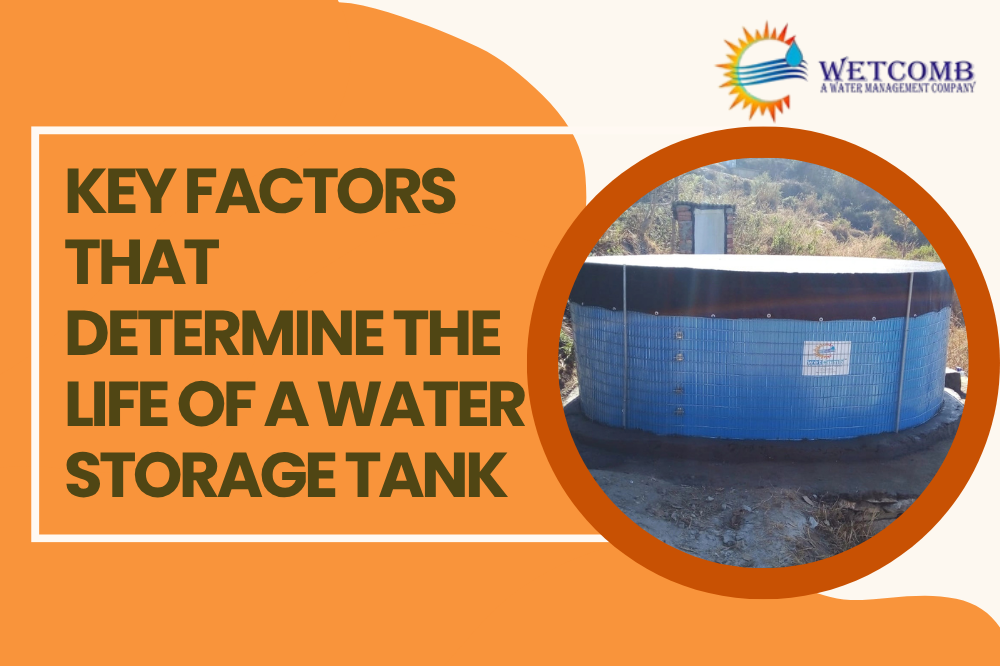
Geo-Water Tanks in India provide a convenient storage solution for farming, engineering and other industrial uses. These large-capacity, flexible tanks can be quickly set up, adjusted for all types of terrain and hold far more water than conventional types of tank. The lifespan of Geo-Water Tanks in India depends upon the quality of the geo-membrane, the structural strength and levelness of its installation surface, and protection from sharp objects or heavy mechanical load which can puncture the membrane. When properly constructed, they are considered as top rated water storage tanks for bulk storage in India.
Installation and Maintenance
The lifespan of a water storage tank comes down to material quality, UV and corrosion resistance, proper certification, and regular maintenance. However, even the best quality materials will not give results if you place it incorrectly. Installing your tank on an uneven surface creates stress points and starts hairline cracks. Poor drainage around the base will over time deplete tank foundation strength. Regular cleaning removes the sediment and bacterial growth that slowly destroy the inner walls. It should be done at least once or twice a year. Inspection of fittings to check for early signs of damage also contributes a lot towards giving your tank added years of service.
Conclusion
The service life of the water tank will depend much on material quality, resistance to UV radiations and corrosion, proper certification and periodic maintenance. Whether you are setting up a rainwater harvesting tank for your own use, looking for GEO Water tanks in India or need a reliable top-ranked water storage tank for daily use, it must follow the quality requirements.
At Wetcomb we make every tank with a single vision of storing pure and clean drinking water that will last as long as you need it to.
Do you want to compare different water storage tanks based on their costs and performance? Find our blog in the next post here, Geo-Membrane Tanks vs Traditional Tanks: A Cost and Performance Analysis.