How to Manage Large-Volume Water Storage Safely
People who have dealt with a leaking tank or contaminated water supply must know how much of a headache it can be. You might think it is much easier to store large amounts of water, but in practice, you need a little bit of expertise to get it right. A few good habits can make the difference between a storage system that sticks for years and one that gives you headaches every 2 months.
This is a straightforward, easy-to-follow approach to safeguard your large water storage system whether at home, farm or business.
Get the Foundation Right First
There are so many cases where people actually ignore the ground surface on which the tank is to be placed. If your ground surface is uneven or weak, your tank will start tilting, cracking or sinking with time especially while holding thousands of litres of liquid. Before installation, ensure that the surface is levelled, properly compacted and free of any sharp stones / debris. This one step saves a ton of future repair costs.
Select the Appropriate Tank for the Role
A lot of people have this wrong assumption that every tank works the same in all situations. Storing needs for an industrial water storage set up is completely different from a small farm pond. For larger volume needs, so many people are using sturdy water storage tanks that are built to last and can handle constant pressure without breaking down in a hurry.
And if you’re trying to utilize the best out of seasonal rain, rainwater storage tanks are a great way to collect and save water instead of letting it off and go to waste, especially during dry months.
Check Your Tank Often
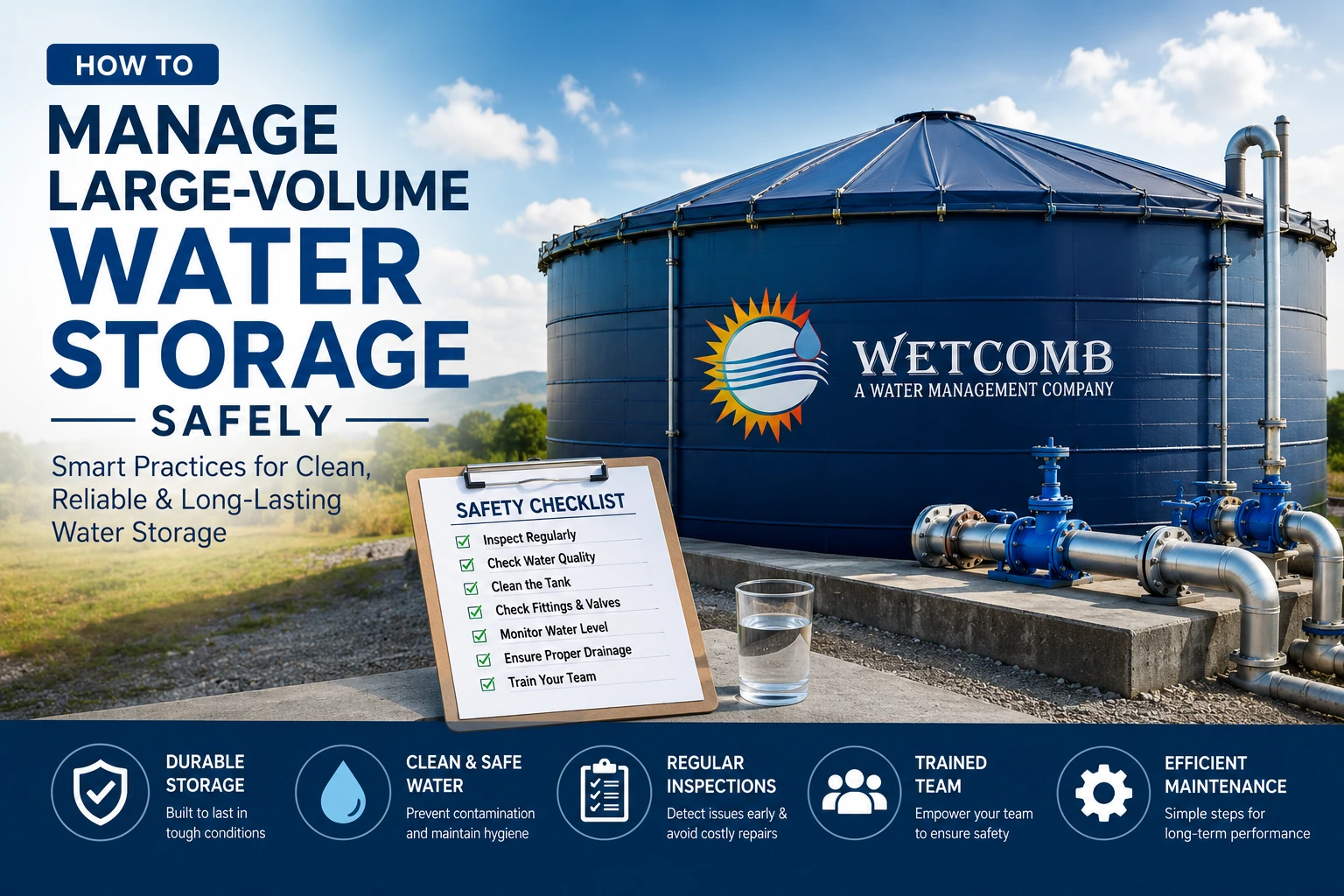
Most of the tank problems do not happen overnight. They gradually build up but by the time you notice it, you’re already dealing with water loss or damage. This is why a monthly checkup has great significance. Always check out for:
- Unusual indicators that might need emergency plumbing service
- Wet spots appear at the bottom of the tank.
- Water level dropping at a faster rate than normal
- A change in the odor or color of the liquid
- Cracks, bulges, Loose fittings on the surface
These checks won’t take more than a couple of minutes, but they pick up on small things before they become big expenses.
Keep the Water Clean
If the water is to be used for drinking purposes or at home, hygiene cannot be optional. Potable water storage tanks must be periodically cleaned, tightly covered to prevent dust and bugs from entering, and inspected for algae buildup. Stale and uncovered water is practically a breeding point for bacteria.
And, even if the water isn’t for drinking, say it’s to irrigate crops or for factories, you still don’t want to keep it dirty. Contaminated water may block machinery, hurt plant development, or create hazardous work conditions if it is not treated on time.
Use Materials That Last Longer
The effect of environmental factors like sunlight, rain and temperature changes increases with time. And this is why the material of your tank matters a lot. It may seem beneficial to use cheaper, lower-grade materials but later you will realise that such a shortcut will end up costing money in the long run in repairs/potential replacement and of course ongoing servicing. It is one of the reasons that flexible, membrane-based systems are having a favorable approach than outdated concrete or metal tanks.
The Geo Line Tank is an excellent choice if you want something that can withstand much longer with minimum amount of maintenance. These tanks are made up of tough and layered membranes that won’t leak and prevent outside contaminants from getting in.
Don’t Ignore Drainage and Airflow
This part often gets overlooked. If water surrounding your tank doesn’t drain properly, the tank surface can weaken over time, while putting the whole structure at risk. A shallow slope away from the base, along with a basic drainage channel, ensures that excess rain water does not collect around your tank.
Ventilation matters too. Poor airflow traps moisture, and trapped moisture is exactly what mold and bacteria need to grow. Storing it in well-ventilated spaces keeps the water fresh for a longer period of time.
Prepare the team that handles it
In case of larger operations like factories or warehouses, safety cannot depend on an individual. Ensure your staff is well trained to identify water level changes, recognize early warning signs and know whom to report an unexpected observation. That quick and easy training session will save you from a bigger mess later.
Final Thoughts
However at the end of the day, water storage safety is all about consistency: check regularly, ensure clean water, use durable materials and employ a team that knows what to look for. The process is very simple. You just need to make it a habit and not something done once in a while.
Wetcomb has years of practical experience creating safe, durable and productive water storage solutions for households, farms and industries, making them one of the most trusted Geo Tank Manufacturer. With the right system and a little routine care, managing large-volume water storage doesn’t have to be complicated, it just has to be consistent.